

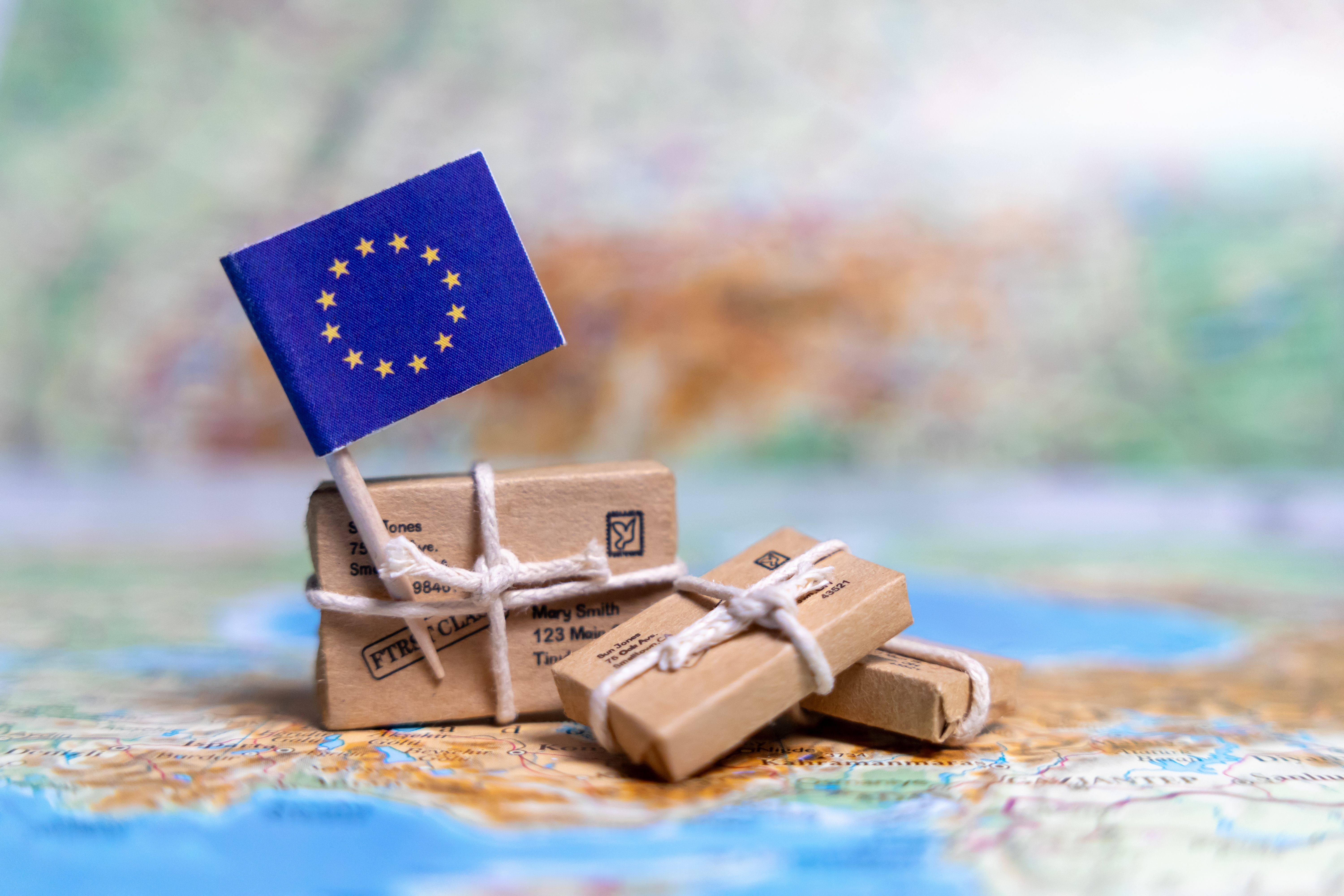
Are you currently selling products to consumers in the European Union? If so, it is essential to be aware that a major set of EU customs changes will come into effect on 1 July 2026.
These changes represent a fundamental shift in how cross-border e-commerce shipments are handled, impacting nearly every parcel entering the EU from non-EU markets. For e-commerce businesses across the APAC region—whether brand.com operators, online retailers, marketplace sellers, or logistics providers—understanding these developments is critical not only to remain compliant, but also to safeguard margins, maintain delivery performance, and ensure a seamless customer experience.
A Structural Shift in EU E-Commerce Imports
The EU’s decision is driven by the rapid growth of cross-border e-commerce. By 2024, more than 4.6 billion low-value parcels were entering the EU annually, highlighting the scale of direct-to-consumer shipments from non-EU markets1.
This surge has increased pressure on customs authorities while raising concerns around product safety, regulatory compliance, and fair competition. Policymakers have identified key risks in the current system, including the entry of non-compliant goods, widespread undervaluation, and a growing competitive imbalance for EU-based retailers2,3.
As a result, the EU is moving towards a more robust and transparent customs framework, strengthening oversight and risk management through its broader customs reform agenda5.
Key Changes Taking Effect on 1 July 2026
1. Removal of the €150 Duty-Free Threshold
One of the most significant changes is the elimination of the long-standing €150 duty-free threshold. Previously, goods valued at or below this level could enter the EU without customs duties.
From 1 July 2026, this exemption will be removed, meaning all goods may be subject to customs duties regardless of value2,4.
For businesses relying on high volumes of low-value shipments, this represents a major shift in cost structure and requires a reassessment of pricing strategies and fulfilment models.
2. Introduction of a €3 Flat Customs Duty
To simplify duty collection, the EU will introduce a flat €3 customs duty per item category (based on tariff classification) for low-value e-commerce parcels2.
This has several practical implications:
- Multi-item shipments may incur multiple duty charges
- Product assortment directly affects the total landed cost
- Order structuring becomes increasingly important
This measure will apply to the majority of cross-border e-commerce parcels entering the EU and is designed as a transitional solution ahead of a more comprehensive customs framework4,5.
3. Greater Emphasis on Seller Responsibility
The new framework reinforces greater accountability for import processes, requiring sellers—or their logistics partners—to take more responsibility for customs compliance.
This shift aligns more closely with Delivered Duty Paid (DDP) principles and reduces the feasibility of relying on end-consumers to pay duties upon delivery5.
The objective is to improve transparency, reduce non-compliance, and create a more level playing field across the e-commerce landscape.
4. Mandatory Item-Level Customs Declarations
Businesses must now comply with more detailed, item-level customs declaration requirements, including accurate product classification and data submission.
Combined with existing obligations such as import VAT, these requirements introduce additional cost layers and administrative complexity.
5. Additional Costs and Fees
Beyond the €3 duty, further charges may apply, including:
- Import VAT (already applicable)
- Potential EU-wide or national handling fees6 (expected on November 1, 2026) and it is planned to have the proposed rate at €27.
- Administrative or brokerage-related costs
Together, these factors significantly increase the complexity of calculating total landed cost and require enhanced pricing accuracy and cost management4,5.
What does this mean in practice?
The new rules fundamentally change how landed cost is structured.
Landed costs are no longer simple or negligible—they are itemised, layered, and highly dependent on shipment composition.
For example, multi-item orders may incur multiple duty charges, VAT, and potential additional fees, making cost transparency and accurate calculation more critical than ever.
Impact on E-Commerce Businesses
Unexpected charges at delivery can create significant customer friction, leading to reduced trust, lower conversion rates, and a negative post-purchase experience—especially as consumers increasingly expect full cost transparency at checkout.
At the same time, stricter compliance requirements and the need for item-level data are increasing operational complexity. Businesses must manage more detailed data capture, face a greater risk of customs delays due to errors, and rely heavily on accurate product classification.
This reflects the EU’s broader shift toward a data-driven customs environment, where compliance begins upstream in the supply chain rather than at the border5.
How Asendia Can Support Your Transition
Navigating the new EU customs landscape requires more than compliance—it demands a strategic approach.
Asendia supports e-commerce businesses with flexible delivery and customs solutions designed to:
- Simplify duty and tax management
- Improve delivery success rates
- Enhance cost transparency
- Adapt to evolving EU regulations
Rather than applying a one-size-fits-all approach, Asendia helps businesses identify the most suitable shipping and customs strategy based on their specific needs and growth ambitions.
Stay ahead of EU customs changes before they impact your business.
Speak with our experts to understand what’s changing and how to prepare your cross-border strategy with confidence.
Reference List
[1] Council of the European Union – New customs duty rules for small parcels | https://www.consilium.europa.eu/en/press/press-releases/2026/02/11/council-gives-final-green-light-to-new-customs-duty-rules-for-small-parcels/
[2] European Commission – Removal of €150 customs duty exemption | https://taxation-customs.ec.europa.eu/news/e-commerce-150-eur-customs-duty-exemption-threshold-be-removed-2026-2025-11-13_en
[3] KPMG – EU: New customs duty rules for small parcels in e-commerce | https://kpmg.com/us/en/taxnewsflash/news/2026/02/tnf-eu-new-customs-duty-rules-for-small-parcels-in-e-commerce.html
[4] European Commission Press Release – €3 duty on low-value parcels | https://ec.europa.eu/commission/presscorner/api/files/document/print/en/ip_25_3045/IP_25_3045_EN.pdf
[5] European Commission – EU Customs Reform | https://taxation-customs.ec.europa.eu/customs/eu-customs-reform_en
[6] Deal reached on Union Customs Code reform | https://www.europarl.europa.eu/pdfs/news/expert/2026/3/press_release/20260323IPR38815/20260323IPR38815_en.pdf
[7] E-commerce, also the EU Parliament against duty exemption for products under | https://www.eunews.it/en/2025/07/09/e-commerce-also-the-eu-parliament-against-duty-exemption-for-products-under-e150/
-1.png?width=400&name=KR%20PR%20Post_Blog%20Banner%20(6)-1.png)

.png?width=400&name=EU%20Customs_LI%20Post%202%20(1).png)