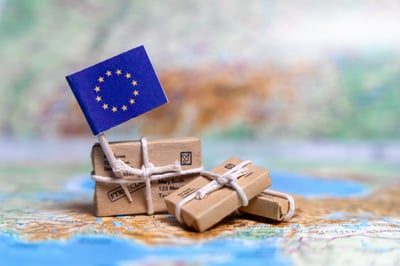


What is next for German e-commerce, and how can e-tailers keep building on the impressive growth achieved?
More and more German consumers shifted to shopping online during the pandemic, therefore the e-commerce market became increasingly competitive. At the same time e-tailers faced Covid-19 related challenges across the supply chain, while having to achieve compliance with complex new Brexit and EU laws. However, thanks to fast-tracked customer service and delivery innovations and support from their supply chain partners, e-commerce players have shown resilience and successfully risen to meet a host of challenges.
So what is next for German e-commerce?
To find out, we spoke to Oliver Schleiss, Chief Sales Officer, Asendia Germany, who has spent over 20 years working in international logistics and distribution. He’s experienced first-hand the digital transformation of European e-commerce, and changing consumer attitudes to the online experience. Here he shares his insights into the future of e-commerce in Germany.

/Landing%20Page%20Images/Yellow%20line.png?width=74&name=Yellow%20line.png)
Q&A with Oliver Schleiss
Chief Sales Officer, Asendia Germany
1) What new opportunities are opening up for e-commerce retailers selling in or to Germany?
Digitalisation continues to drive growth and bring exciting new opportunities to both retailers and consumers in Germany. Shoppers benefit from an agile and more mature e-commerce service, with a wider range of distance-selling solutions and better product offerings. For e-tailers, visibility on the larger marketplaces can quickly generate new customers and customer segments. German consumers are very open to cross-border ecommerce, as long as estimated delivery times are adhered to. They don’t mind waiting, just that the goods arrive when expected.
2) What impact will the growing awareness of sustainability have on the German market?
For smaller retailers, sustainability offers a chance to really stand out from the big players by offering customers green products delivered in sustainable packaging and using eco-friendly transport methods. However, I think we will see more e-tailers – along with more consumers – thinking carefully about how to minimise the carbon footprint of ecommerce. The growing popularity of the Green Party in Germany is proof of this.
Want to know more?
For an in-depth, detailed analysis of developments in German e-commerce, and to read the rest of Oliver‘s interview, download the Germany 2021 E-commerce Country Report by RetailX in partnership with Asendia.

.png?width=400&name=EU%20Customs_LI%20Post%202%20(1).png)